Nutrition
Roti, rice and blood sugar: a practical guide for Pakistani kitchens
"Can I still eat roti?" is the question I hear most from people with diabetes. The short answer is yes. Here's how much, with what, and why it matters.
By Hafiza Hamna Mushtaq · · 4 min read
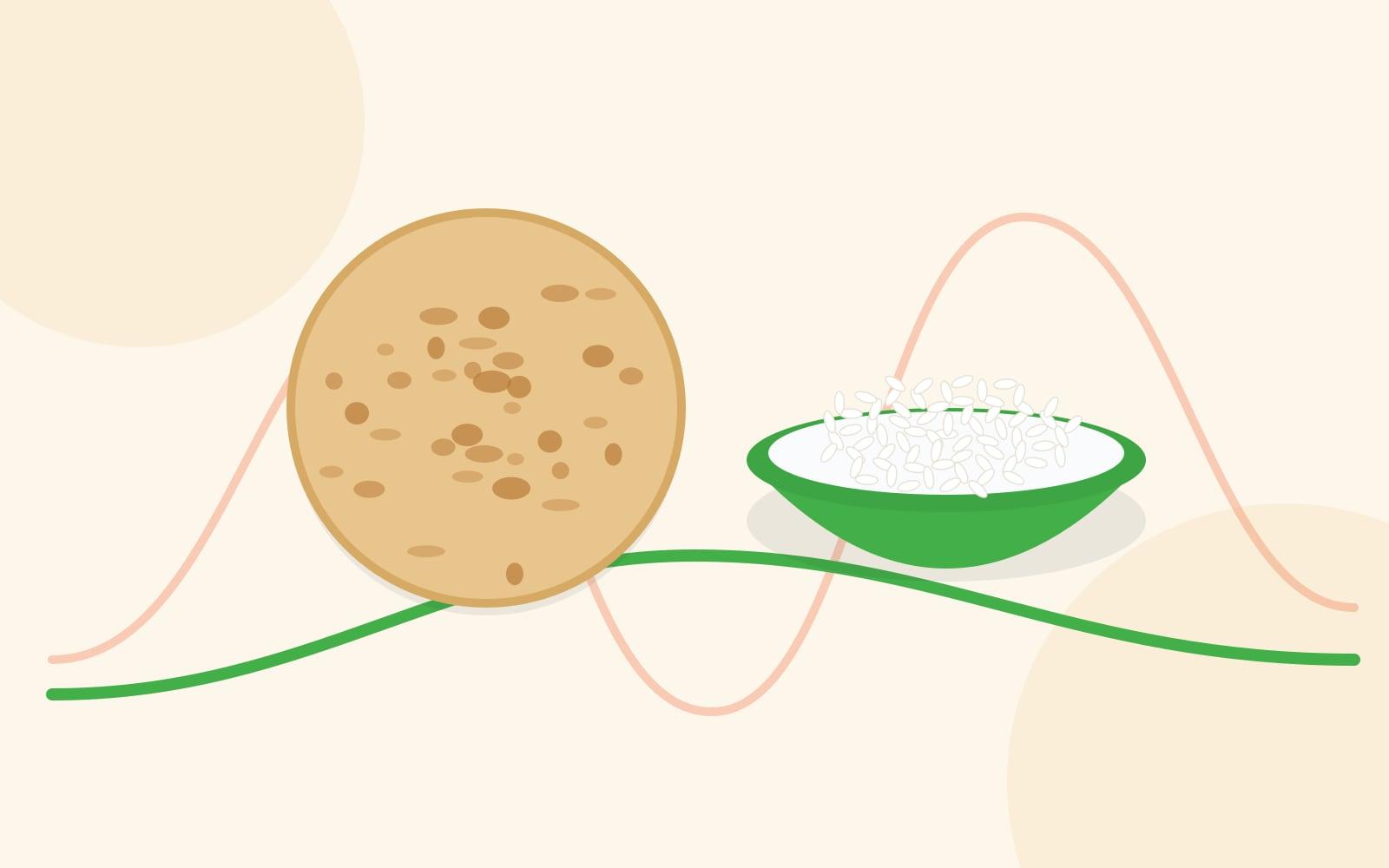
"Can I still eat roti?" is probably the question I'm asked most by people with diabetes. A close second: "Is rice completely off limits now?"
Short answers: yes, and no. The longer answer is below, because how much you eat, what you eat it with and when you eat it all make a real difference.
Carbohydrates matter, but they're not the enemy
Roti, rice, bread, potatoes, fruit and sugar all break down into glucose. If you have diabetes or prediabetes, your body has trouble clearing that glucose from your blood. So the amount of carbohydrate in a meal, and how quickly it's absorbed, shows up in your readings.
Cutting carbohydrates out completely isn't necessary for most people. It's also very hard to keep up in a Pakistani household, where nearly every meal is built around roti or chawal. What works better is getting the portion right and building the rest of the plate around it.
Roti: the size and the flour both matter
Not every roti is the same. A thin homemade chakki atta roti and a large tandoori naan are very different amounts of carbohydrate. A puri or paratha adds a lot of oil on top of that.
A few swaps that help:
- Chakki atta instead of maida. Whole-wheat flour keeps the bran, and with it more fibre.
- Mix in another flour. Adding some besan (gram flour) or jau (barley) atta to the dough raises the protein and fibre. Start with about a quarter of the flour and see how the family takes to it.
- Know your number. For many people, one or two medium rotis per meal works well. The right amount depends on your size, how active you are and which medicines you take, so it's worth working out with your dietitian.
- Keep paratha for the weekend. If you love it, have it, but not every morning, and cook it with less ghee.
Rice: portion and pairing
White rice raises blood sugar fairly quickly, especially in large amounts. That doesn't mean it's banned.
- Use a smaller plate and aim for about one cup of cooked rice, roughly the size of your fist, instead of a full plate.
- Eat it with daal, chana or a chicken or meat salan, plus salad or raita. Protein, fat and fibre slow down how fast the glucose reaches your blood.
- Biryani and pulao are heavier because of the oil and the portion sizes, especially at dawats. Take a smaller serving and fill the rest of the plate with salad and raita.
- Brown rice has more fibre. If your family won't eat it, don't worry. The portion matters more.
You may have read that cooking rice and letting it cool makes it healthier. Cooling does increase resistant starch a little, but the effect on blood sugar is small. It isn't a reason to eat more of it.
Build the plate around the roti, not the other way round
A simple way to think about any meal, without weighing anything:
- Half the plate: vegetables. Sabzi, salad, or a bowl of vegetable soup.
- A quarter: protein. Daal, chana, eggs, chicken, fish or dahi.
- A quarter: roti or rice.
This works for most people with type 2 diabetes, and the rest of the family can eat the same way. You shouldn't have to cook separately for yourself.
The sugar you don't notice
Often the biggest problem isn't food at all. It's drinks.
- Two teaspoons of sugar in chai, four or five times a day, adds up fast. Reduce it slowly. A sweetener is an option if you really can't manage without.
- Packaged juices and cold drinks raise blood sugar very quickly. Water, unsweetened lassi or shikanjvi without sugar are better choices.
- "Sugar-free" and "diabetic" mithai or biscuits often still contain plenty of flour and fat. Read the label before assuming they're safe.
Yes, you can eat fruit
Whole fruit gives you fibre, vitamins and water. A small apple, a guava, an orange or a slice of melon is fine for most people with diabetes, ideally as a snack rather than straight after a big meal.
Mango season is the hard one, I know. A few slices instead of two whole mangoes is a good compromise.
Timing helps too
- Try not to skip meals and then eat a very large dinner. Spreading food through the day is easier on your blood sugar.
- A 10 to 15 minute walk after meals, especially after dinner, helps your muscles use up glucose.
- A late, heavy dinner followed by sleep tends to show up in your morning reading.
A word about medicines
If you take insulin, or tablets such as gliclazide or glimepiride, suddenly cutting your carbohydrates can make your blood sugar drop too low. Don't make big changes to your diet without speaking to your doctor or dietitian, and check your sugar more often whenever you change something.
When to get help
If your HbA1c isn't coming down, you've just been told you have prediabetes, or you're getting conflicting advice from every relative at the table, a dietitian can turn all of this into a plan that fits how your family actually cooks and eats.
This article is for general information and does not replace individual medical or dietetic advice. Medical disclaimer.