Practical Guides
Six desi food swaps that add up, without giving up the food you love
You don't have to give up roti, chai or dawats to lose weight. Six small swaps in how we cook and drink every day, kept up for months, do more than any crash diet.
By Hafiza Hamna Mushtaq · · 4 min read
یہ مضمون اردو میں پڑھیں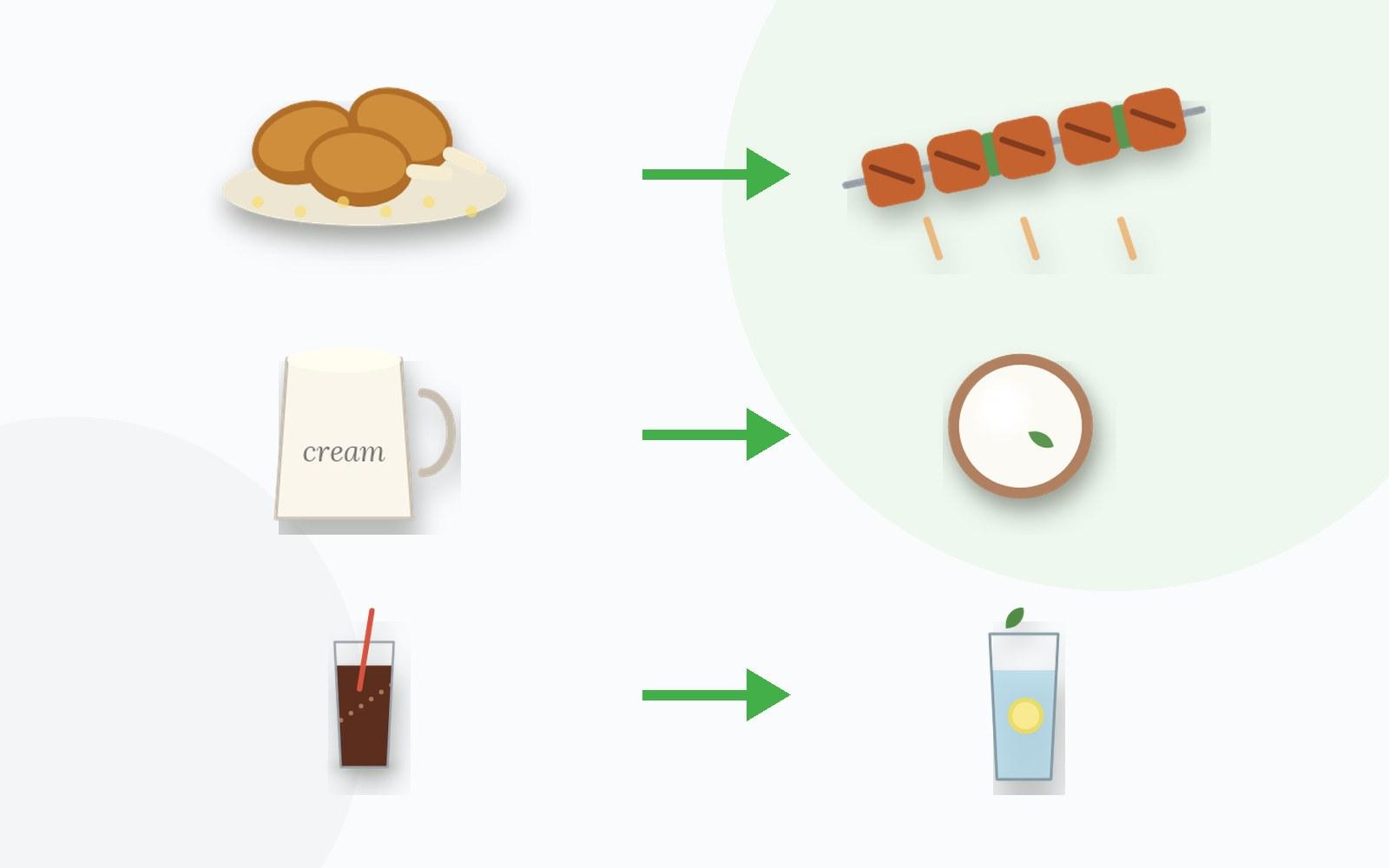
When people hear "dietitian", they imagine being told to eat boiled chicken and salad for the rest of their lives. That is not how it works in my clinic, and it is not how weight loss works in real Pakistani homes.
The plans that last are built from swaps, not sacrifices. Small changes in how a dish is cooked, what goes in the chai, what you drink with dinner. Each one saves a little every day, and over months that is where the result comes from.
Here are the six I suggest most often.
Swap 1: Grill, bake or steam instead of deep-frying
Fried chicken, pakoras, samosas, fried fish. Deep-frying can double or triple the calories of the same ingredient, because the food soaks up oil.
Chicken tikka on the grill, fish baked with lemon and masala, steamed or air-fried samosas: same flavours, a fraction of the oil. If you must shallow-fry, use a non-stick pan and measure the oil with a spoon rather than pouring from the bottle.
Swap 2: Yoghurt instead of cream or malai in curries
Korma, karahi and handi often get their richness from cream, malai or a heavy hand with the oil. Plain dahi gives you the same thickness and tang with far less fat, and adds protein and calcium.
The trick is to whisk it first and add it at the end on a low heat, so it does not split. Many Punjabi and Kashmiri recipes were traditionally made this way.
Swap 3: A little less sugar in chai, every week
Three cups of chai a day with two spoons of sugar each is around 30 grams of sugar, which is the entire daily limit the NHS recommends for an adult, before you have eaten anything.
I never tell people to drink chai without sugar from tomorrow. Cut by half a spoon a week. Your taste adjusts within a few weeks, and most people find that after a month they cannot drink it the old way. The same goes for the sugar in lassi and sharbat.
Swap 4: Water or plain lassi instead of cold drinks
A regular can of cola is about 35 grams of sugar, a 500 ml bottle more than 50. These calories do nothing for hunger; you drink them and eat the same meal anyway.
Water, plain or salted lassi, or soda water with lemon and mint are the swaps. And a word on fruit juice: it is still sugar, even when it is fresh. The NHS advice is to keep juice and smoothies to one small glass, up to 150 ml a day, and to eat whole fruit instead.
Swap 5: Plain chapati instead of a ghee paratha
A paratha can carry one or two tablespoons of ghee or oil, which is 100 to 250 calories before anything goes on it. Switch most days to a plain chapati, and when you have a paratha, make it the one you really enjoy.
While you are there, choose wholemeal chakki atta over white, and brown rice or a mix when you can. Wholegrain keeps you fuller for longer, which makes every other swap easier.
Swap 6: Lemon, herbs and spices instead of extra salt
This one is less about calories and more about blood pressure, which is a serious problem in Punjab and something my own research has looked at. Most of our salt comes from the salt added in cooking and at the table, plus pickles, chutneys, papad and packaged snacks.
Flavour comes from elsewhere: lemon, green chilli, dhania, pudina, ginger, garlic, garam masala, chaat masala without the salt. Taste before you add salt, not after.
And at dawats
Dawats and weddings are where most plans fall apart, so plan for them rather than pretending they will not happen.
- Start with salad and sabzi. Fill half the plate first, then add the biryani or korma you came for.
- Stop when you are full. You do not have to finish the plate. Fullness takes about twenty minutes to register, so eat slowly and talk more.
- Pick one mithai. The one you really want, savoured, rather than a bit of everything.
- Water between courses, not cold drinks.
Why swaps beat diets
A crash diet loses weight quickly and then puts it back, usually with a little extra. The NHS guidance is a steady half to one kilogram a week, which does not sound exciting until you realise it is twenty to forty kilograms over a year, and it stays off because nothing you did was extreme.
Six swaps, kept up, will do that for most people. If you have diabetes, kidney disease or take regular medicines, plan the changes with your doctor and dietitian, because some swaps need adjusting for you.
If you want help turning these into a plan built around what your family actually cooks, that is exactly what a consultation is for.
Sources
- NHS, Sugar: the facts
- NHS, 8 tips for healthy eating
- NHS, 12 tips to help you lose weight
- Better Health Channel (Victoria), Cooking tips for healthy eating
- WHO, Healthy diet fact sheet
This article is for general information and does not replace individual medical or dietetic advice. Medical disclaimer.