Health
Five weight-loss myths I hear every week, and what the evidence actually says
Detox teas, cutting out roti, crunches for belly fat, skipping meals, fat-burner capsules. Every week someone in my clinic has tried at least one. Here is what each one really does, and what works instead.
By Hafiza Hamna Mushtaq · · 5 min read
یہ مضمون اردو میں پڑھیں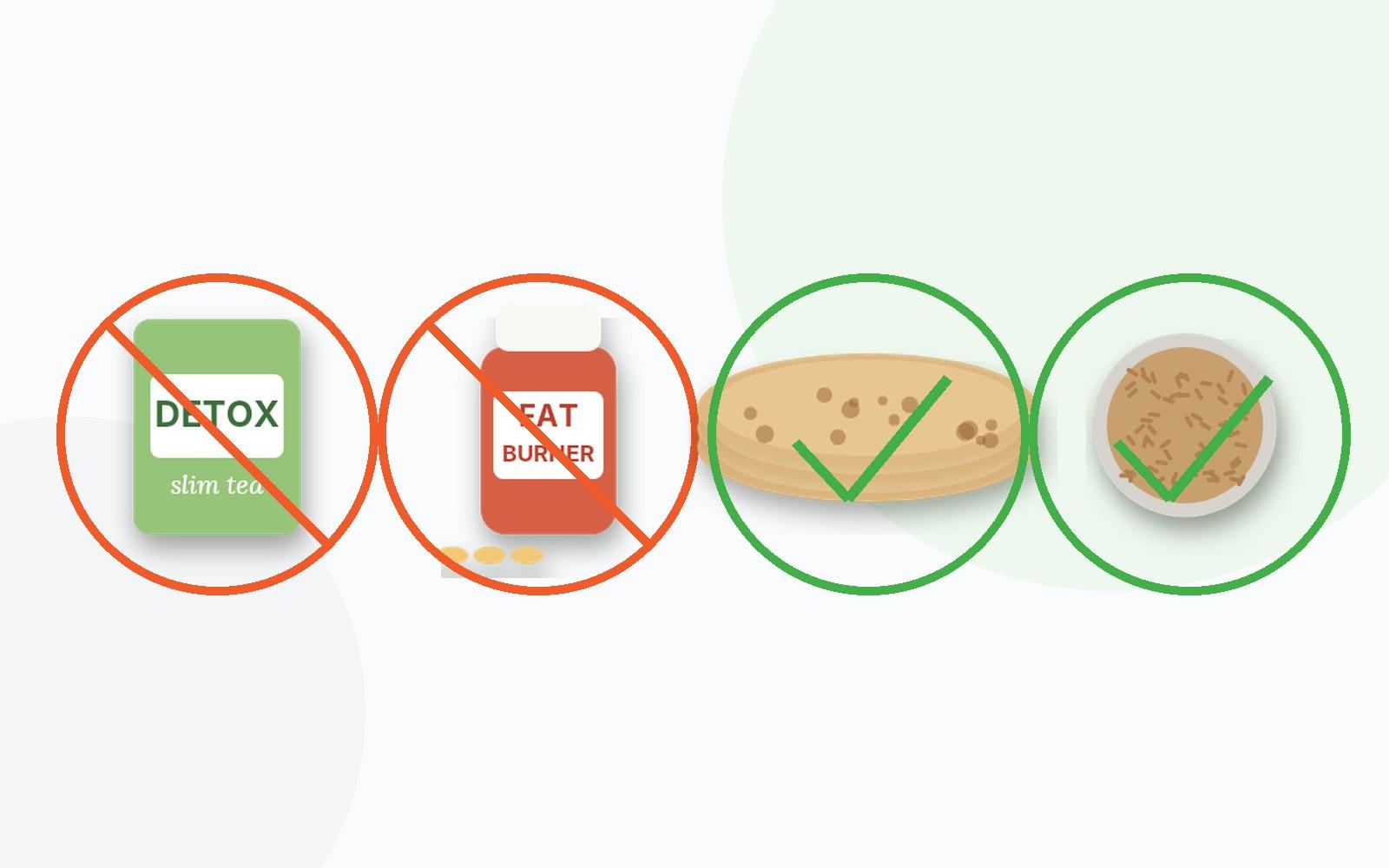
Most people who come to me for weight loss have already tried a lot. Not because they are lazy or lack willpower, but because the advice they followed was wrong. Some of it comes from Instagram, some from a cousin who lost weight before a wedding, and some, honestly, from products designed to sell.
So let me take the five myths I hear most often, one by one, and tell you what the research actually shows. None of this is about blame. The advice was bad, not you.
Myth 1: Detox teas melt fat
Slimming teas, detox teas, "flat tummy" teas. They are everywhere, and they do seem to work for a few days, because the scale goes down.
Here is what is really happening. Most of these teas contain senna or similar laxatives, and often diuretics. You lose water and the contents of your bowel. That is not fat. The British Dietetic Association puts it plainly: there is no evidence that detox products remove toxins, and the quick weight loss is mostly water and glycogen that returns as soon as you eat normally.
Your body already has a detox system. It is called your liver and your kidneys, and they work every minute of the day without a tea. Used regularly, laxative teas can cause dehydration, cramps, low potassium and dependence, which is the opposite of healthy.
What works instead: fibre from sabzi, fruit, daal and whole grains, enough water, and regular meals. Boring, but it is what keeps your gut moving and your weight steady.
Myth 2: Roti and rice must go
This is the one that makes me saddest, because it turns a normal, affordable Pakistani diet into something stressful.
Carbohydrates are not the enemy. Gram for gram, carbohydrate has less than half the calories of fat. The NHS advice is to base meals on starchy foods, choosing wholegrain or higher-fibre versions where you can. The problem is usually not the roti itself but the ghee on it, the size of the portion, and what it is eaten with.
A chapati made from chakki atta, in a sensible portion, with daal and sabzi, is a good meal. The same chapati fried as a paratha, three of them, with a creamy korma, is not. The difference is not the wheat.
What works instead: keep roti and rice. Make them a quarter of the plate, fill half with sabzi and salad, and the last quarter with protein. Choose wholegrain atta or brown rice when you can, and go easy on the ghee.
Myth 3: Crunches burn belly fat
If this worked, every gym would be full of flat stomachs. It doesn't.
You cannot choose where your body loses fat from. This is called spot reduction, and it has been tested properly. A 2021 meta-analysis of 13 studies found that exercising a specific area does not reduce the fat over that area any more than it reduces fat elsewhere. Crunches strengthen the muscles under the fat, which is useful, but they do not remove the fat on top.
Belly fat, especially the deeper visceral fat that matters most for South Asians, responds to overall activity and eating habits over months, not to a particular exercise.
What works instead: total activity. Walking, cycling, stairs, housework, plus two or three short strength sessions a week. Combine that with regular meals and the belly follows, slowly.
Myth 4: Skipping meals speeds things up
It feels logical. Fewer meals, fewer calories. In practice it usually goes the other way.
Skipping breakfast or lunch tends to leave people much hungrier later, and that hunger is paid back in the evening with bigger portions and more snacking, often on the least helpful foods. The NHS lists "don't skip meals" among its core weight-loss tips for exactly this reason. For people with diabetes, skipped meals can also cause low blood sugar if they are on certain medicines.
What works instead: three regular meals, with protein and fibre at each, so that hunger stays manageable. If you want to try time-restricted eating or fasting, do it deliberately and with your doctor if you have a medical condition, not by accident because you were busy.
Myth 5: Fat-burning supplements do the work
Garcinia, green coffee bean, raspberry ketones, "thermogenic" capsules with a muscular figure on the label. The promise is always the same: take this and the fat burns itself.
Systematic reviews covering more than 120 clinical trials of these supplements found that none produced clinically meaningful weight loss. Any small effects were tiny, short-lived, and often from poor-quality studies. Some products have also been found to contain unlisted stimulants or prescription drugs, which is a real safety problem.
Compare that with the money people spend on them every month in Pakistan, and it is not a good deal.
What works instead: the thing no capsule can replace. A pattern of eating you can keep, enough protein, daily movement, sleep, and someone to check in with. If weight-loss medicines are being considered, that is a conversation with your doctor, not a purchase from Instagram.
The honest summary
Real results come from habits, not hype. In my clinic the people who do best are not the ones with the strictest plan. They are the ones who keep roti on the plate, eat regularly, walk most days, and stop believing that a tea or a capsule will do it for them.
If you have tried several of these and feel stuck, that is a good reason to book a consultation. We will look at what you actually eat, your health, your routine, and build something you can keep.
Sources
- British Dietetic Association, Detox diets food fact sheet
- NHS, 8 tips for healthy eating
- NHS, 12 tips to help you lose weight
- The Conversation, weight-loss research explained (spot-reduction meta-analysis; supplement reviews)
- NICE NG246, Identifying and assessing overweight, obesity and central adiposity (South Asian thresholds)
This article is for general information and does not replace individual medical or dietetic advice. Medical disclaimer.